







Sound absorption or sound insulation in the office: which solution do you need?
Many organisations experience noise nuisance in the office. Employees are distracted by conversations, meetings disrupt the workplace or a room sounds unsettled because of reverberation. The terms sound absorption and sound insulation soon come up. Yet these solutions address different problems. This regularly leads to confusion. For example, an organisation may invest in additional insulation, while reverberation is the real cause of the problem. Or vice versa. In this blog, you’ll discover which noise problem you’re experiencing, which solution is appropriate and why many office environments benefit more from good acoustics than from additional sound insulation.
Birgit Brinks
20 August 2026
Short answer: what’s the difference?
The difference lies in the location of the sound issue.
Sound absorption = improves the sound within the same room.
Sound insulation = limits noise between different spaces.
Suppose conversations sound loud in an open-plan office. In that case, sound absorption often plays the leading role. Do you hear conversations from an adjacent meeting room instead? Then it is more often a matter of sound insulation.
Sound absorption versus sound insulation at a glance

A simple rule of thumb:
- Can you hear too much noise in the same room? Consider sound absorption first
- Can you hear noise coming from another room? Consider sound insulation first
Why does this confusion arise?
Many people experience sound as one problem. For example, someone might say:"There's too much noise in the office." But that statement doesn't yet tell us where the problem lies. It could be about:
- Reverberation.
- Poor speech intelligibility.
- Disruptive conversations.
- Lack of privacy.
- Noise from another room.
Only once you know the cause can you choose the right solution. That’s why an effective approach always starts by analysing the problem, not by choosing a product.
What is soundproofing?
Sound absorption focuses on the acoustics within a room. When sound hits a hard surface, some of it is reflected back into the room. This happens, for example, with:
- Glass
- Concrete
- Steel
- Hard floors
- Large smooth walls
As a result, sounds remain audible for longer and reverberation occurs. Sound-absorbing materials absorb some of those sound waves. This reduces the number of reflections and makes a room sound quieter.
Signs You Need Soundproofing
Do you recognise one or more of these situations?
- Conversations sound loud
- Employees talk over one another
- Making calls feels unsettling
- A meeting room sounds hollow
- Colleagues become distracted easily
- You can hear conversations everywhere in the same room
In that case, the cause is often the room acoustics.
Common solutions
In office environments, you often see:
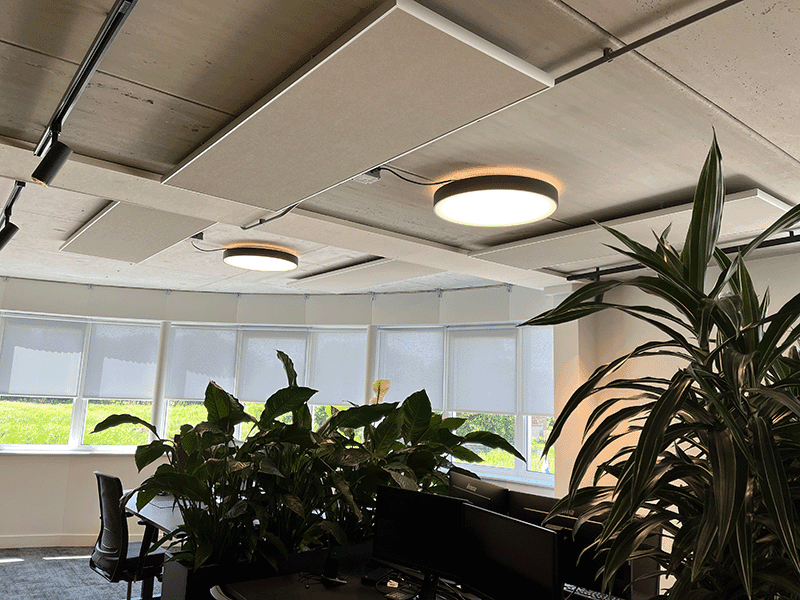
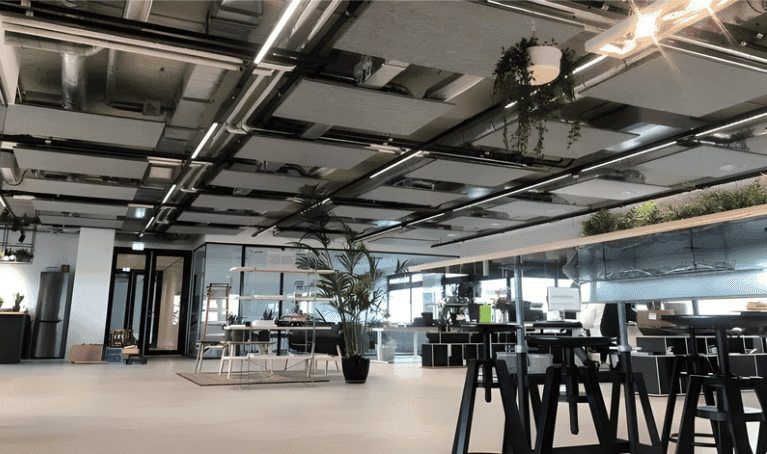
- Acoustic ceiling panels
- Acoustic wall panels
- Baffles
- Ceiling rafts
- Desk screens
- Acoustic partition walls
- Acoustic furniture
These solutions absorb sound and reduce reverberation.
What is sound insulation?
Sound insulation focuses on sound travelling from one room to another.
For example:
- A meeting room next to workspaces
- A boardroom where confidential conversations take place
- An office next to a production area
- A consultation room next to an open-plan office
In these situations, the construction of the building plays an important role.
Signs You Need Soundproofing
For example, you may experience:
- Conversations from another room
- Sound coming through walls
- Insufficient privacy during meetings
- Noise nuisance from adjoining workspaces
In that case, sound insulation often deserves attention.
Common solutions
Examples include:
- Soundproof walls
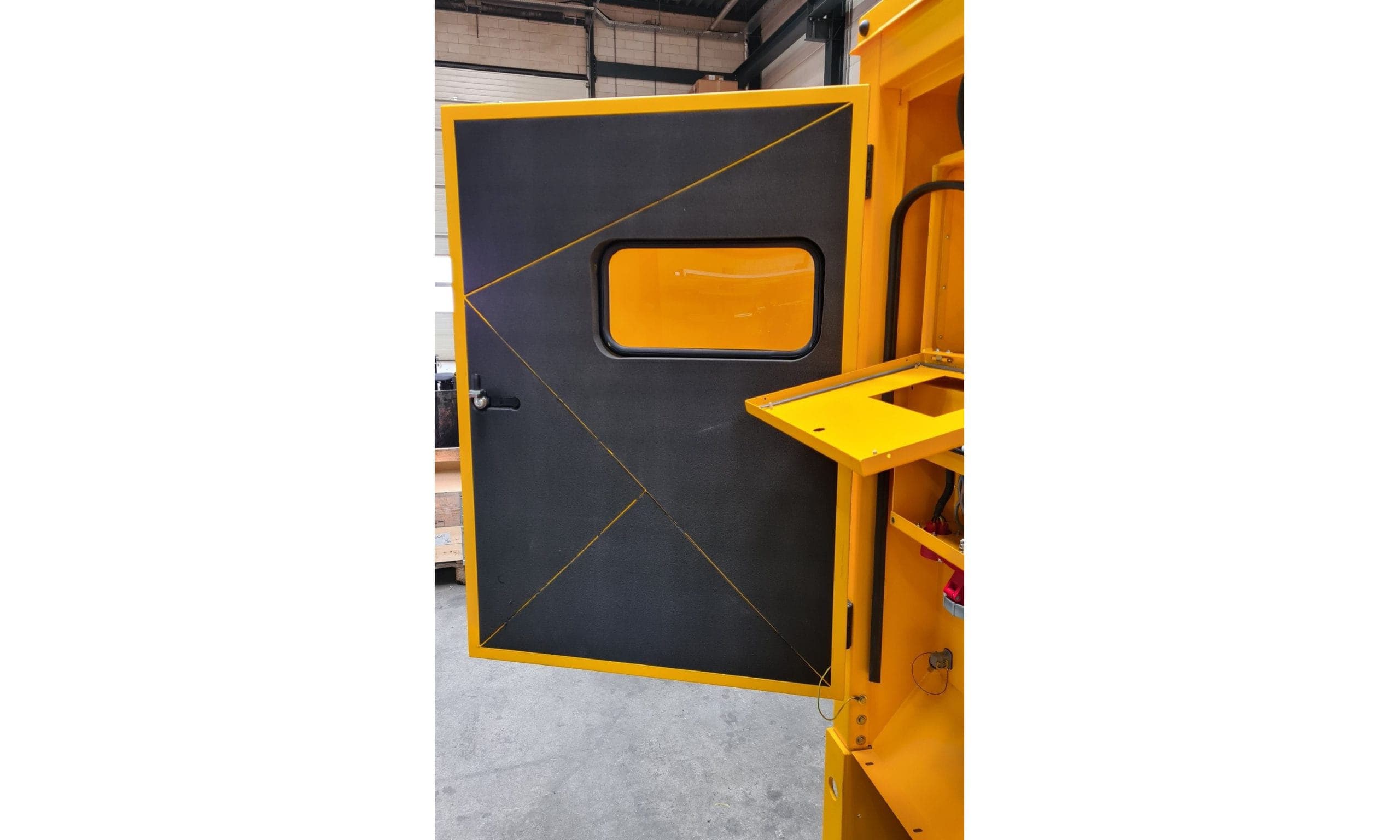
- Soundproof doors
- Special acoustic glass
- Secondary constructions
- Structural modifications
These solutions block sound rather than absorbing it.
The Most Common Mistake Made in the Office
Many organisations look for sound insulation when reverberation is the real cause of the problem. This is particularly common in modern office environments. More and more offices are using:
- Concrete ceilings
- Large expanses of glass
- Open-plan workspaces
- Hard finishes
These materials create a lot of sound reflections. As a result, a room sounds busier than it actually is. Additional insulation does not solve that problem. A room with a lot of reverberation will remain reverberant, even when no one hears sound from another room.
Which solution suits your situation?
Situation 1: the open-plan office sounds noisy
Employees can hear colleagues’ conversations from the other side of the room. Likely cause: sound is spreading through the same room. Suitable solution: sound absorption. Consider ceiling panels, baffles, wall panels and partition walls. This is precisely why improving office acoustics often delivers more results than organisations initially expect. Would you like to learn more about the causes of echo, reverberation time and the solutions that have the greatest effect on working comfort and concentration? Then read our page on improving office acoustics.
Situation 2: the meeting room sounds echoey
During meetings, participants speak louder than necessary. Likely cause: reverberation. Suitable solution: sound absorption. Absorption on ceilings and walls reduces reflections and improves speech intelligibility.
Situation 3: confidential conversations remain audible
Staff outside the room are unintentionally able to hear. Likely cause: sound is leaking into adjacent rooms. Suitable solution: sound insulation or a combination of insulation and acoustic measures.
Situation 4: the call centre feels unsettled
Every employee is conducting conversations at the same time. Likely cause: multiple sound sources within the same space. Suitable solution: soundproofing. Acoustic absorption lowers the overall noise level and increases calm.
Why office acoustics often have the greatest impact
When organisations improve the acoustics, employees often notice the effect straight away. Conversations sound calmer. The space feels less busy. People understand each other better. This creates a more pleasant working environment in which collaboration and concentration can go hand in hand more easily. That is why room acoustics are the first point of attention in many office projects. Only then do specialists look at additional measures for privacy or sound transmission between rooms.
How do you discover what your office needs?
The cause of noise nuisance is not always immediately apparent. For example, a room may seem quiet, while the reverberation time is too long. Conversely, a meeting room may sound pleasant, but offer insufficient privacy. That is why an acoustic analysis often provides the clearest insight. During such an analysis, specialists look at, among other things:
- The function of the space.
- The layout of the office.
- The location of sound sources.
- How sound travels.
- The desired level of privacy.
Based on this information, we provide advice tailored to both the space and the people who work in it. Are you unsure whether your office is mainly affected by reverberation, sound reflections or sound transmission between rooms? On our page about improving office acoustics, you can read how an acoustic analysis provides insight into the cause of the problem and which measures deliver the greatest impact.
Conclusion
Sound absorption and sound insulation address different acoustic problems. Sound absorption improves the acoustics within a room and reduces reverberation, sound reflections and distraction. Sound insulation limits sound transmission between different spaces and contributes to privacy. In modern offices, reverberation often plays a bigger role than many organisations realise. That is why improving office acoustics regularly delivers more results than additional insulation.
Not sure which solution suits your situation? First, look at where the problem arises. That insight forms the basis for a calm, comfortable and productive working environment.
FAQ
Does the layout affect the sound experience?
Yes. The layout has a major influence on how people experience sound. Hard materials such as glass, concrete and metal reflect sound back into the room. As a result, a space can quickly become noisy. Soft materials, such as upholstered furniture, carpeting and acoustic solutions, absorb some of the sound instead. The placement of workstations, meeting tables and walkways also plays a role. A smart layout often creates a calmer environment without the need for major renovations.
What impact does an open-plan office layout have on noise?
An open-plan office layout encourages collaboration, but often also creates more noise. Conversations, telephone calls and meetings easily spread throughout the space. As a result, employees become distracted more quickly. Noise nuisance increases particularly when an office contains many hard surfaces. With the right combination of absorption, screening and workspace layout, an open-plan office remains pleasant and comfortable.
When is an acoustic analysis worthwhile?
An acoustic analysis is valuable when employees regularly experience noise nuisance or when it is unclear exactly where the problem comes from. For example, some spaces may sound noisy because of reverberation, while others lack privacy. An analysis maps out the current situation and provides insight into the measures that will have the greatest impact. This helps organisations make targeted choices.
Does more acoustic material always have a greater effect?
No. The location of the acoustic material often determines a large part of the result. A few well-placed panels regularly have more effect than a large number of panels in less suitable locations. That is why acoustic specialists first assess the room, the sound sources and the key reflective surfaces. This creates a solution that suits the situation.
Why do some offices experience more noise pollution than others?
That depends on various factors. The size of the space, the number of employees, the layout and the materials used all affect the acoustic experience. An office with lots of glass, concrete and open-plan workspaces often experiences more sound reflections than a space with sufficient sound-absorbing materials. The way employees use the space also plays an important role.
Which room is often the biggest acoustic challenge?
In many organisations, the open-plan office requires the most attention. Many people often work here at the same time, phone calls take place and spontaneous discussions arise. All these sources of noise come together in one space. As a result, sound spreads quickly and employees are more likely to experience distractions. A good balance between collaboration, concentration and privacy therefore makes a significant contribution to a pleasant open-plan office.
When do you notice the effect of acoustic measures?
Many people notice an improvement immediately after the acoustic solution has been installed. Conversations sound calmer, sound travels less far and the room feels more comfortable. The overall effect depends on the size of the room, the cause of the noise problem and the solution chosen. In practice, employees often experience greater peace and comfort very quickly.